
Built like a tank yet rich and warm, the FIFINE AmpliTank K688 lets you tame loud sources with studio-grade focus. Its cardioid capsule, quick mute, gain control, and real-time monitoring turn this metal mic into your compact, everyday studio.
FIFINE AmpliTank K688 USB/X...
Black / Grey Filter & No Stand (K688)Get notified when this item is back in stock

"Is it the best microphone?" "Does it last for long?"
The question of “which is the best microphone” only rings true in the ideal case where everything else is set, you just pick the greatest microphone and are good to go. And that is exactly how you do in a recording studio.
A sensible voice reminds you of choosing a microphone based on the use environment when the budget is tight. Because most of the time recording especially streaming was done in environments that are not treated. With hard surfaces all around your room, the sound is going to bounce off and bounce into your mic. The excessive noise floor is the top deal-breaker for most people.
“Does the microphone last for a long time” is a correct question to ask when you just started out. Because that mic will be the only workhorse that you are going to use for a while. But the question is not all about durability but also upgradeability. The build quality may not fall short but if the audio quality can not keep pace with your ever-increasing demand for recording or streaming, such a mic could still be short-lived.

Productivity

Content Creation

Streaming
The bang-on audio upgrade for a minimalist setup?
- With the Aces hiding down the bottom and only a pre-installed metal shock mount holding the mic, what you get is simplicity at the very first glance. If you want no obtrusive shape in front of your streaming or broadcasting camera, it does the job to blend in your setup with the sleek finish on an all-metal body.
It is more than a looker!
- So is the shock mount. You do not find any nut to tighten the mount, but only the rubber band suspending the whole mic, which is a much more effective way to absorb vibration. It also cuts down on the low-end sensitivity, as a result, there will be fewer boomy noises to muffle your audio.
What makes it an anyone's recording microphone?
Noise Rejection Comes First
In terms of functionality, the defining feature of this FIFINE K688 USB/XLR dynamic microphone is the ability to deliver perfect sound in some imperfect environments and the flexibility to balance the present need and future expansion in your audio production.
The low-sensitive dynamic capsule? Kind of...
What you really need to muddle is the background sound, and the dynamic cardioid capsule does let the K688 shine through in that aspect. Normal users do not have any sort of special acoustical treatment in the rooms. A dynamic microphone will come in super helpful in this circumstance because it does not pick up much distracting background or reflected sound.
Combo of cardioid pickup patter? Spot on!
It doubles down on the noise rejection with its cardioid polar pattern. Though you have to work on top of and close to it for the clearest pickup of your voice, the result is just mind-blowing if you’re used to being a condenser mic user. Anything happening out there will not prominent anymore and you can actually experience the advantage of a cardioid microphone this time.

A Step Further With Its USB/XLR Dual Connection
The best bit is that you can continue reaping this benefit for the years to come! Because the design behind is well thought out, making it easy to set up straightway when you just started out and leaving you the choice to upgrade without ditching the whole mic in the future.
XLR mics are featureless while USB mics are powerless. Not at all, at least you can complement them with each other in the case of the FIFINE K688.
What's The Point of it?
The two outs give universal appeal to everyone in the following years. Because you do not need to put the work into learning to use it at the very beginning. When you want to up your game or look for the next stage at some point, you can do some experiments with it for the XLR function.
If there is such a necessary, or maybe for a special two-PC setup, you can even send the signal from the mic to two different places, like your PC and an audio interface or a PA when using it outdoor.
A Small Studio Is Crammed Into A Metal Microphone Body
- What packed with the mic is the USB audio cable. Do not know tons about microphones and just want solid sound at the very beginning? You should try out the USB connection first to get experienced.
- Take the microphone out of the box and just hook it up on your computer with the included USB cord, you are all set. It is 2022 already, and the USB-C should be on everything, so the USB port at the bottom of the mic is type-C to save the trouble of finding the right cable.
- Because of the USB connection, it is not limited to the usage on computers only, it can branch out onto a Play Station console, an Android or an iPhone. Find a 3.5mm TRRS cable for hooking it up with your controller, it can even work with your Xbox. Even before the XLR port steps in, you have got quite some connectivity to play with already.
- A small studio is crammed into the tiny body. With the USB connection, the on-body controls are also the fun parts to play with and you will definitely fall for the convenience they provide. And they are just straightforward and do not set the death trap of a single turn of software knob ruining your audio.

Mic & Headphone Volume Controls
There are also two dials at the bottom for the microphone and headphone volume. The advantage of the controls being underneath is that they will not stand in the way when you hook the mic onto a boom arm. And you can keep a clean and simple look of it in front of a camera.
Touch-sensitive Mute
It could have been good and bad, but things changed with the LED indicator and the monitoring jack. You will not find yourself have not recorded anything yet halfway through.
Live-monitoring Headphone Jack
- Without a headphone amp built in, the 3.5mm port at the back can drive a pair of headphones with its impedance rated between 16 ohms and 75 ohms. Within this range you still have some headphones to choose from instead of being left with only game headsets for monitoring. Because of the combo of the latency-free feature and an input level control, you can pretty much avoid the wild fluctuations in volume by making adjustments on the fly.

Why Still Bother With The XLR?
You have already become addicted to all-in-one full-on USB mics, but eyeball an XLR microphone to up the game from time to time? Why not have them both? Change the connection to the XLR when you are getting ready for something big.
Using the mic with a solid preamp system is going to potentially polish the sound quality up and even give slightly different coloring to the audio, which is sort of a redeeming feature to make up for the lack of software.
The best-known fact is that the self-noise level will become much less noticeable with a balanced XLR connector. Because any interference picked up along the signal path will be canceled out. If your first concern is the overall noise floor, then the XLR connector and the dynamic capsule are the best combinations to make you concern-free. But make sure to choose a decent XLR audio cable for the hookup since it is not included in the package.
- The audio quality may come down to what interface you are running the mic through if you are using the XLR connector. But basically, it is not the general type of dynamic mics where the mids are prominent while the brightness is lacking. Inheriting from FIFINE’s bloodline, the treble is something that will not miss but it is not so much to assault your ear with harshness.
The Signature Broadcast Bass
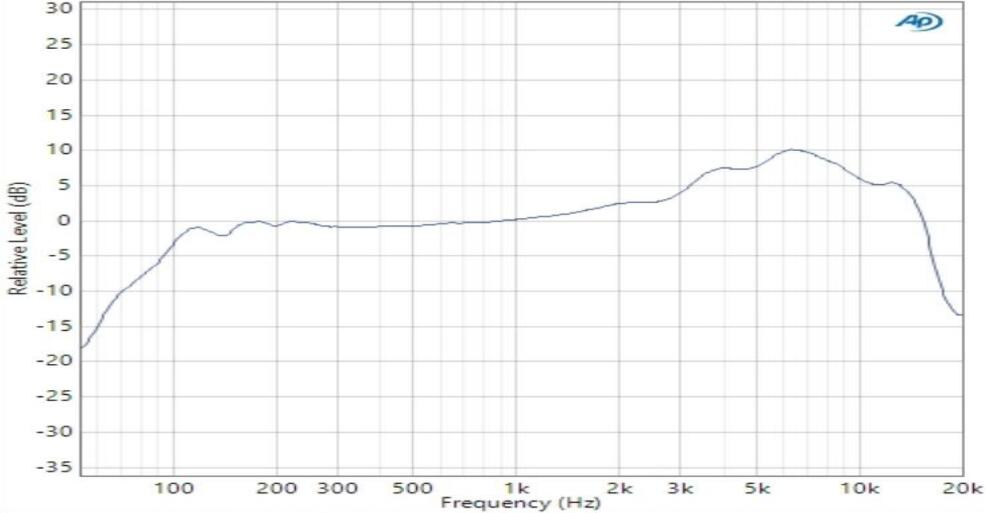
The broadcast signature sound should be the first thing popping up in your head when it comes to dynamic mics. The FIFINE K688 is not exceptional. But the low-ends are not too heavy to make your voice super bassy and woolly. Another benefit is that the proximity effect is less prominent so the low-frequency noises, such as the booming generated from hitting the desk or the mic stand, will not be exaggerated.
The Proper Mids for Recording
It is pretty flat through the 500 Hz to 1k Hz midranges to give the real-world sounding of the instruments. Because of the slight boost between 1k to 2k Hz, a bit more bites are added to the high-pitched instruments. So yes, it is a FIFINE microphone that you can use to properly record some instrument.
The drawback of the uncommon articulation from a dynamic microphone is that the sibilance may be fatiguing. But thanks to a much thicker and flocked pop filter, the capsule will not be hit hard by the air-blowing, making it less of a problem to avoid sibilance. That also helps reduce the plosive noises.
Airy Treble From A Dynamic Mic?
To get the cleanest audio, you just need to pay a little more attention to the off-axis placement. With the sibilance sorted out, you and your audience can put your heart and ears to enjoy the bright and airy sounding up the top and even some sparkles. Leave alone streaming and voice-over, if you are planning to record a song cover in your untreated room, it is still perfectly ideal for the price.
Specifications
| Type | Dynamic |
|---|---|
| Polar Pattern | Cardioid |
| Output Connection | USB type-C (mic end) to type-A 2.0 (computer end)/XLR |
| USB Power Consumption | Voltage: 5±0.25 V Current: 86 mA |
| Bit Depth/Sample Rate | 16-bit/44.1k-48k Hz |
| Frequency Response | 50-15k Hz |
| S/N Ratio | >80 dB |
| Max. SPL | 130 dB |
| Sensitivity | -58±3dB |
| Adjustable Gain Range | 0 to +12 dB |
| Shipping Weight | 1.0 kg |
Frequency Response Chart
Q&A
PS5✔️ for sure. Hook it up to the PS5 console USB port with the included USB cable, and set the mic as the default input, and output if your 3.5mm wired headset is plugged into the mic.
Xbox❌ is a no-no. Third-party USB audio devices aren't allow to work with Xbox, this K688 is no exception.
It works when using with a proper USB adapter. But we recommend using it only with Windows and Mac computers, since the quality of the adapters may vary and the low-battery status of your phone may affect the performance of the mic.
🍎iPhone/iPad with a type-C port needs a type-C male to type-A female adapter.
🍎iPhone/iPad with a lightning port needs a lightning male to type-A female adapter.
⚠️If it's the lightning version, because of the protocol, it's highly recommend the adapter from Apple store. https://www.apple.com/shop/product/MD821AM/A/lightning-to-usb-camera-adapter
🤖Android with a micro-USB port needs a micro-USB male to type-A female adapter.
🤖Android with a type-C port needs a type-C male to type-A female adapter.
The thread size is standard 5/8". To attach the mic onto a scissor arm stand, you need to screw the 5/8" to 3/8" adapter that comes with the arm to the shock mount in the first place.
And a tutorial of using the FIFINE BM63 boom arm with the K688 is below. The steps are the same when you use the K688 with other arm stand.
The main difference is about the tone, the K688 is more on the high-and-mid, while Tank3 is the most neutral sounding one among the three, while the AM8 sounds most like traditional dynamic microphones with a lot more of the bass.
Or let's put them into real life, if you're concerned about the background but don't want your voice sound quite bassy, the K688 could be a better fit out of the three. The AM8 has the advantage of noise-rejection over the rest two if the environment is super noisy, like in your gaming room.
At last, the Tank3 fits a wider range of users, you don't have to worry about your voice getting muddier or more harsh.
Besides the coloration, the appearance and the build quality might also be the deciding factors in this price range. If you want to stand out and add some flavor in the frame, the AM8 with a square shape and RGB lighting is the clear winner. If it's about the opposite style, then the Tank3 is the best fit for its super solid metal body, which is even 1/3 heavier than the K688 but in a more compact body.
- MLMichel L.Verified BuyerRated 3 out of 5 starsJan 15, 2025FIFINE K688 dynamic microphone could be much better if…
Too muddy sound in USB mode and a little bit better in XLR. It’s a pity because the construction and design are great.
Was this helpful? - WGWalter G.I recommend this productRated 5 out of 5 starsJan 18, 2023Wholly Molly
When I purchased this mic I was skeptical to say the least when I saw the price. My skepticism has never been so wrong. This mic is absolutely worth every dollar and more. My audience noticed a huge difference in quality when i changed over. I can't wait to see what Fifine comes out with next!
Was this helpful? - RRobbyI recommend this productRated 4 out of 5 starsNov 7, 2022Great microphone with great support
As soon as I saw this microphone, I knew it was time for an upgrade... I obviously don't want to spend $500 on a mic like the Shure SM7B but this microphone has a sleek design with a really similar sound at a fifth of the price so I bought it. It took about a month to come since it came overseas from China but it wasn't the biggest deal, upon receiving the microphone it sounded great but I only had 2 concerns, first of all, one of the rubber bands holding the shock mount to the microphone fell off somehow so I had to spend an hour trying to re-attach it as it is a very tight fit but other than that the microphone sounded great and I was super happy with it until day 2 when the USB-C cable included with it just stopped working, luckily I tried a different cable and it worked again so I just contacted support and within a day, they responded to me and sent out 2 replacement cables. All in all, I am very happy with this microphone and would highly recommend it if you're on a budget as the only issues I encountered was probably just me being unlucky and will all be solved.
Was this helpful? - LLeroyI recommend this productRated 5 out of 5 starsNov 24, 20255 Stars
Love it no problems just beauty
Was this helpful? - Lleroygraybill@outlook.comI recommend this productRated 5 out of 5 starsNov 24, 20255 Stars
Love it no problems just beauty
Was this helpful?